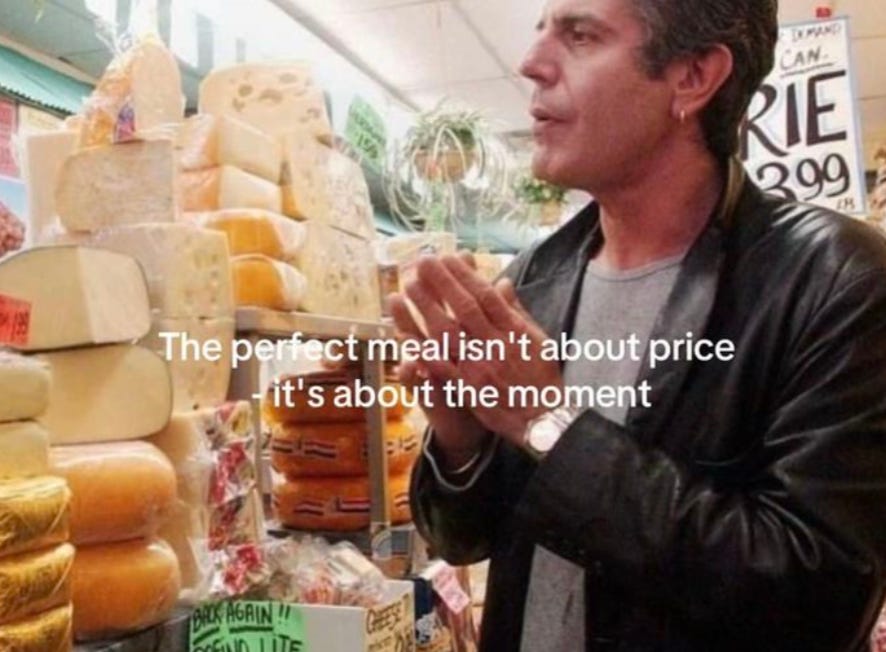
Anthony Bourdain shows up everywhere now, which is interesting given that his work was made before social media shaped how we experience things.
It has made me wonder whether what we need now is something different.
Bourdain came along when travel was mostly something you watched or read about. Critics, guidebooks and television shaped what places were meant to be like. Travel culture was polished and aspirational, and for many people it existed more as an idea than a reality.
Travel was not completely inaccessible, but it often felt out of reach unless you knew how to do it properly.
Bourdain pushed against that.
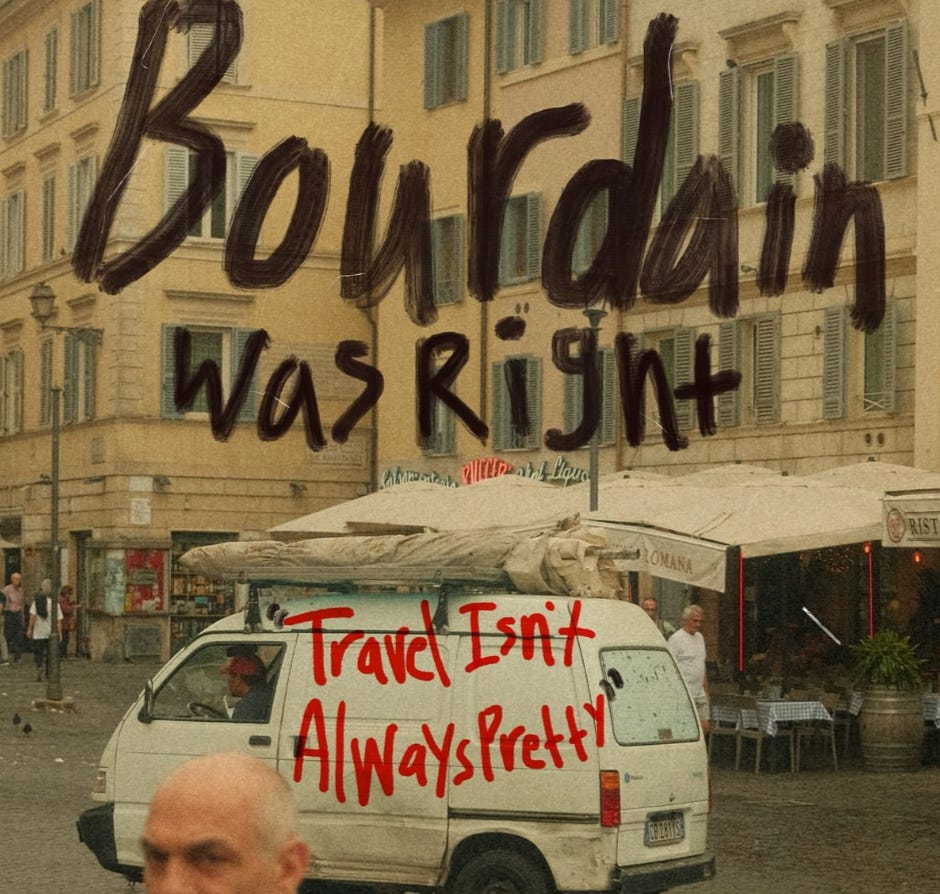
He used to say travel is not always pretty. That was not cynicism. It was honesty. He showed that travel was not about getting things right, but about experiencing it. The people, the food, the awkwardness, and the moments that were not polished to perfection.
He took travel off the pedestal and put it back at human level. By doing that, he made it feel less precious and less intimidating, which mattered at a time when access still felt gated.
The shift from access to too much choice
That is not the world we are in now.
Experience is everywhere. Movement is normal. Eating out is normal. Trying things is normal. If anything, it never really stops. Even when you think you are doing enough, there is always something else you could be doing. Another place. Another restaurant. Another trip. Another option that might be better than the one you chose.
Experience quietly turns into something you chase, rather than something you are actually in. Not because people are shallow or greedy, but because access exploded without coming with a manual for how to choose.
Bourdain did what was needed at the time. He helped lower the barrier when access felt intimidating. Now that barrier is gone. Access is not the problem anymore.
The harder part is knowing how to move inside it.
Taste inside abundance
Choice is great until it becomes overwhelming. At that point, taste becomes an essential tool for navigating too much choice.
Taste used to operate as a marker of status. It signalled access, exposure, and belonging, shaped by class, education, geography, and circumstance. When choice was limited, taste formed through constraint. Life did much of the filtering.
What has changed is not inequality, but abundance. For those living inside expanded access, experience is constant. Options rarely narrow themselves. Choice stays open longer than it used to.
So taste has shifted. It no longer functions primarily as a signal of status. It has become a way of filtering choice. A way of deciding, stopping, and letting something be enough.
Taste has not become pretentious or elitist. It has become necessary. It is not about knowing what is best, but about knowing when to stop choosing.
It is the ability to decide, commit, and enjoy without constantly second guessing yourself. And because no one really teaches that skill anymore, people feel overwhelmed even when they are doing all the “right” things.
Small moments of hesitation
I notice this in myself often, in small everyday moments.
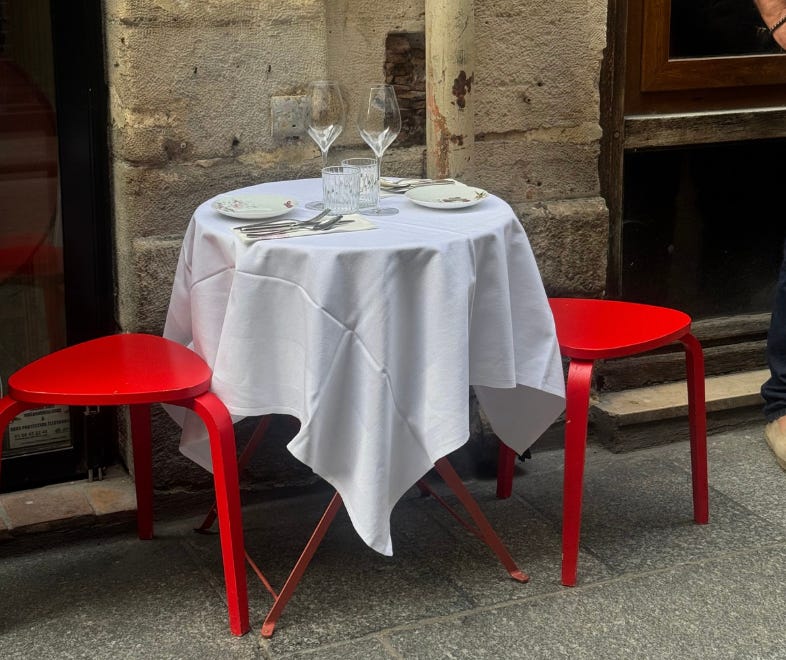
Like leaving a social event early and questioning my decision. Or going to a restaurant and being asked where I would like to sit. Every option looks good. None of them are bad. Nothing is really at stake. And yet I still pause.
I look around for a moment too long. Window or corner. Inside or outside. I might ask what they recommend, not because I cannot decide, but because once I choose, the decision closes. Sitting down means committing. Letting the other options go.
And then, a few minutes later, the moment settles. Conversation starts. Food arrives. Nothing was wrong. There never was.
That small hesitation tells me a lot. Not about restaurants, but about how unused I had become to letting decisions be final. How often I kept my options mentally open, even after choosing. Not because I wanted the perfect option, but because I did not always trust myself to choose and then relax into that choice.


Tasteful hedonism in practice
In a world of unlimited choice, algorithms and artificial intelligence, choosing for yourself and letting that be enough feels quietly rebellious now.
This feels like a natural evolution of what Bourdain helped make possible. He encouraged people to move when access was limited. Now the challenge is different.
It is not about doing more. It is about knowing how to move inside infinite choice without losing yourself to it.
For me, this is what Tasteful Hedonism looks like in practice. Not excess. Not restraint. Wanting more, without losing sight of what is already here. Choosing, and then letting that choice land.
I care about living well. I am quite existential in that way. Deeply aware of how short life is and how little of it we are actually entitled to. I do not experience that awareness as panic, but it does keep me wide awake.
I don’t want to spend my life chasing a better version of it that I might never arrive at. This might be the best one I get. And if that is true, I would rather enjoy it while it is happening than always reaching for what comes next.
Learning how to be content, knowing when to say yes and when to say no inside that noise, is not complacency. It is a skill. And increasingly, it feels like a superpower.
Tasteful Hedonism, in that sense, is not about refinement or status. It is the ability to filter, decide, and know when to stop. To enjoy the life you’re in without constantly scanning for what comes next.
Sometimes, it starts with something simple. Sitting down at the table you chose, and giving yourself permission to enjoy it.
Stay Trendie x