

In case you missed it, Steven Bartlett had a couple of glasses of wine and lost three days of his life. The terrifying part isn’t that he said it. It’s that he said it like it was useful information.
He slept worse. Ate worse. Podcasted worse. Didn’t get to the gym. And then, almost as an afterthought: “I could track all this on my Whoop, #ad, #sponsor, #investor.”
Bartlett isn’t the villain of this. He’s the most successful product of it. A man who has so thoroughly internalised the logic that he genuinely believes a glass of wine is a three day emergency. He’s not performing it. He really believes it. And he doesn’t even know it.
None of us are really immune to it.
There’s a version of this that gets told as an anti-optimisation argument. Opt out entirely. Go full hedonist. But that’s just the same trap in different packaging. Opting out is still letting culture decide how you live.
This isn’t about opting out. This is about opting in, intentionally.
And not in the way you think. Too much of it and pleasure disappears from your life quietly, without you even noticing.
In France nobody asks whether they deserve the wine. The aperitivo in Italy isn’t a reward for a productive day. The long Sunday lunch isn’t a treat you’ve earned - it’s just Sunday. Pleasure isn’t something these cultures schedule or recover from. It’s integrated. It’s assumed. The question was never what will this cost me. It was always just, what am I going to gain.
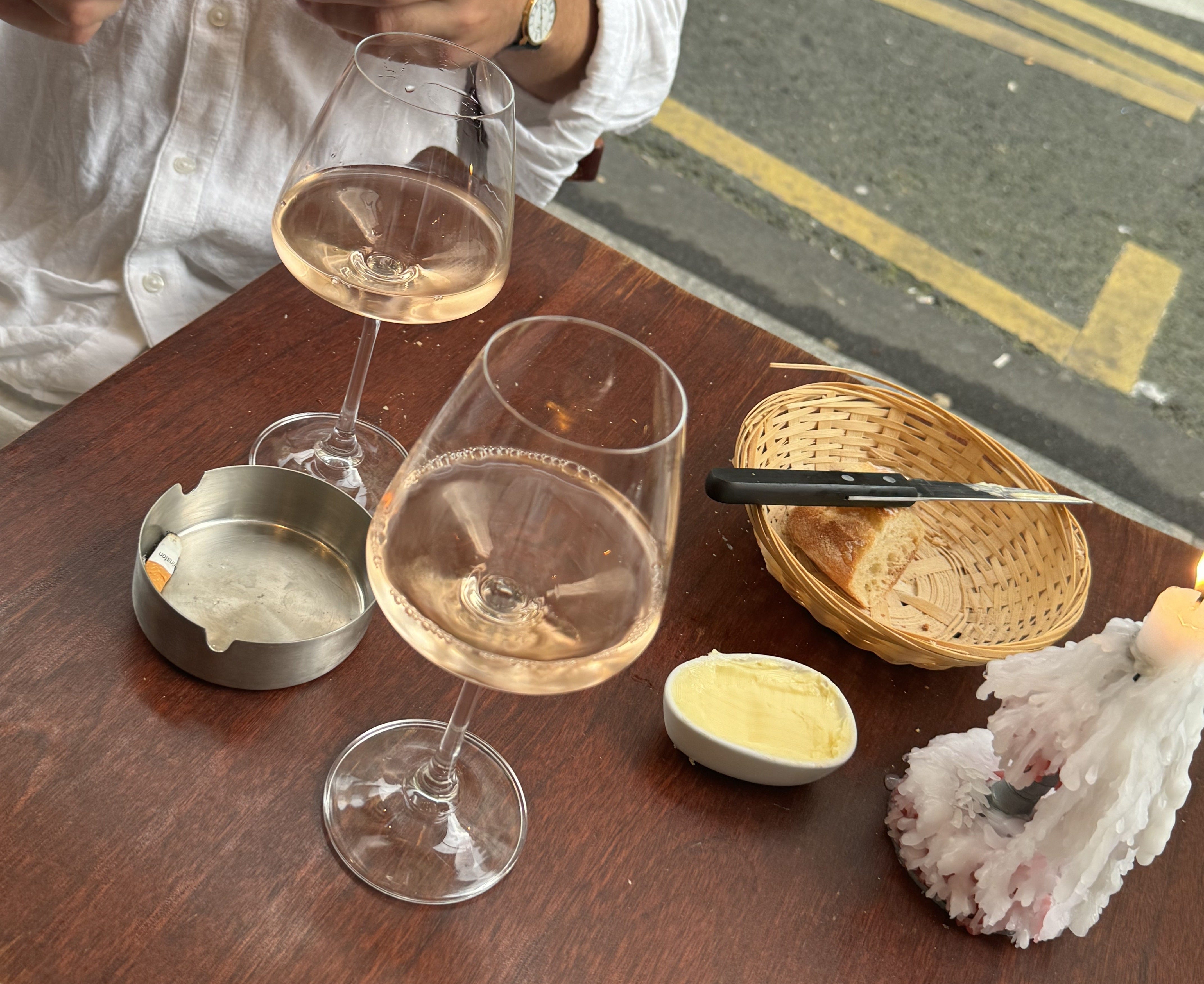
Most of us have felt it. On holiday somewhere warm, sitting at a table longer than we planned, drinking something we didn’t need to justify. And then we came home and forgot how to do it.
Because at home, pleasure has to be deserved. Earned. Logged. Recovered from. And that changes the relationship to it entirely.
Sometimes it looks like cancelling dinner because you have an early morning. Skipping the birthday drinks because it’ll affect your sleep score. Leaving the table early because tomorrow is more important. And slowly, without noticing, the things that make life actually good start disappearing from your week. Then your days. Then your hours. Until you have squeezed every last drop of pleasure out of your own life.
Because pleasure is texture. And texture is exactly what over-optimisation removes.
The things that feel good are almost always the things that interrupted the plan. The unexpected evening. Ordering the bottle. The stay-too-late. Pleasure lives in the unoptimised, in-between moments. That’s why you can’t track it, sell it, or schedule it. The moment you start optimising for pleasure you’ve already missed the point. It only arrives when you stop trying to control everything and just let Tuesday be Tuesday.
You’re not unhappy, but you’re not content.
I remember listening to one of Bartlett’s podcasts where he asks someone who works closely with him: “Do you think I am happy in my life?” The answer was honest. “Yes, but I don’t think you’re content. You’re always chasing the next thing, and I am not sure why.”
I’ve never forgotten it.
Optimisation can get you to happy. It cannot get you to content. Because there is always another metric. Always another gap between where you are and where you could be. That gap is the product. And as long as you’re inside it, content is impossible.
The tragedy is that discontentment isn’t loud. You’re fine. And fine is the most dangerous place to be because it doesn’t alarm you. Nothing is wrong. Nothing is ever wrong. You’re just never surprised, never derailed, never sitting somewhere you didn’t plan to be at an hour you didn’t intend to stay until. You’re never inconvenienced by something wonderful.
Memory doesn’t store the smooth parts. It stores the moments that broke the pattern. The texture. The edges.
Nothing really happens on a Tuesday. Until it does. And then you remember it forever. The bottle opened for no reason. The plan that changed at 9pm. The conversation that went somewhere neither of you expected.
Optimise everything and you remove all of it. Not dramatically. Just quietly, Tuesday by Tuesday, until one day someone asks what you’ve been up to and you genuinely don’t know what to say. So you say “not much” and move on. Even when it was everything.
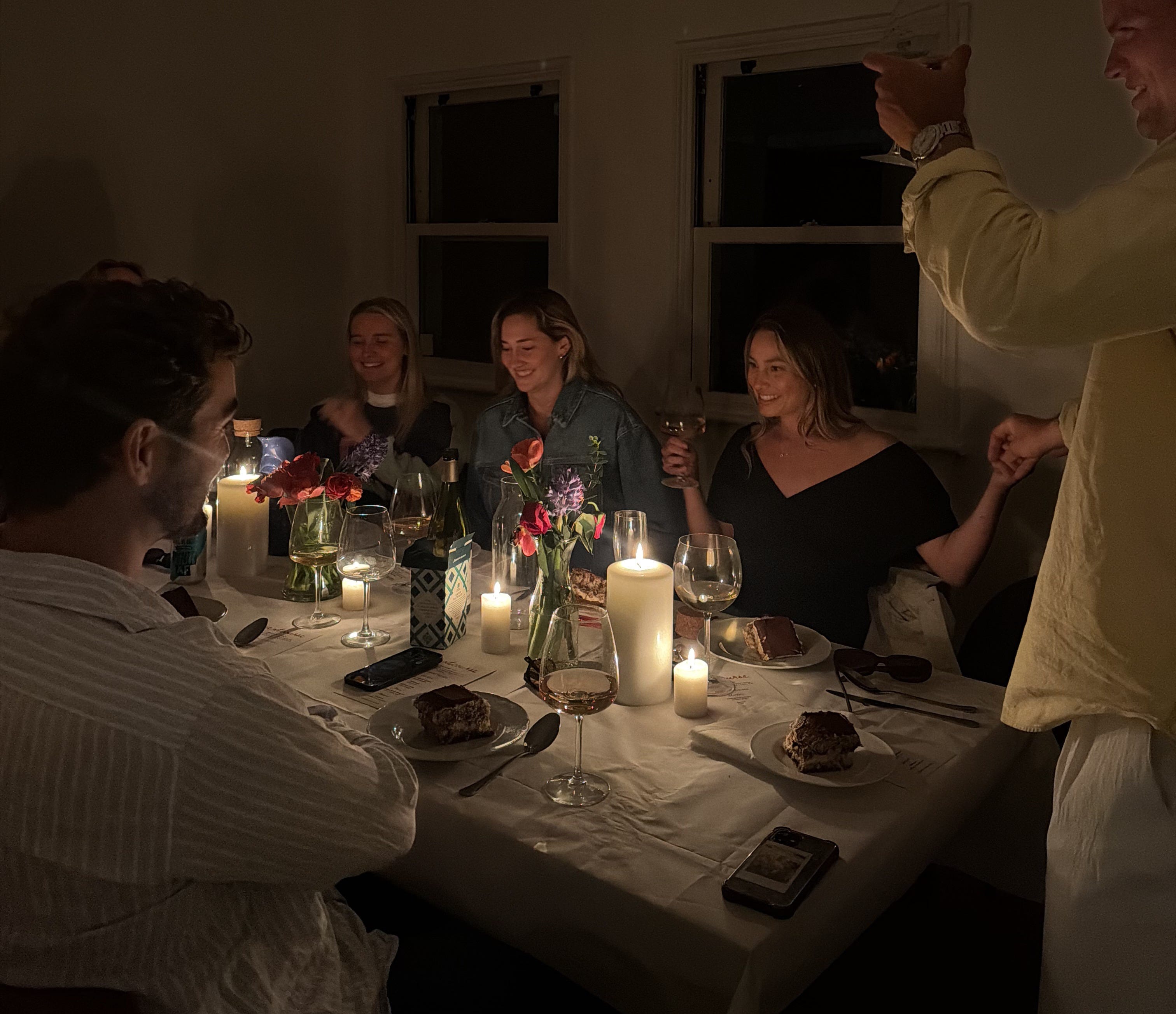
The longest study on human happiness ever conducted - eighty years, thousands of people - found that the single biggest predictor of a good life wasn’t diet, exercise, sleep scores, or net worth. It was the quality of your relationships. The kind you build at long dinners on weeknights you didn’t plan. Exactly the kind you cancel when you’re optimising.
A life so optimised that a glass of wine breaks it isn’t disciplined. It’s brittle. And brittle is just another word for out of control.
No One Profits From Your Peace.
Every industry profits from you believing the good life is just out of reach. That’s not a conspiracy. It’s just a business model. And it works because we keep believing it.
Tired? Product. Anxious? Programme. Can’t sleep? Supplement. Can’t enjoy a glass of wine without three days of consequences? That’s not a you problem. That’s a customer.
The really dark genius of it is that it co-opted the language of liberation. Self-care. Autonomy. Taking back control. But the control it’s selling you is control over yourself - which means the thing being controlled and the thing doing the controlling are both you. You become your own optimisation project. Your own worst critic dressed up as your own best coach.
When I first entered the world of entrepreneurship, Bartlett was probably my most listened-to podcast. A lot of his content is genuinely useful. But there is a subtle undertone that makes you feel like you should listen to every single episode, otherwise you’re already behind. I used to listen at 1.5x speed just to get through more episodes. I was looking at his model of success and thinking it was my own.
Ironically none of it made me sharper. None of it made me more focused. I was just more controlled. And in the process I was quietly optimising myself out of the exact things I was working so hard to protect. Freedom. Time. Real connection. The life on the other side of the ambition.
That’s the trap nobody warns you about. You can work so hard toward a life you want that you accidentally stop living it.
I’m not Anti-Optimisation. I’m Anti-Not Living.
Getting better wasn’t by tracking more or protecting more. It was by deliberately choosing to be in the uncomfortable situation. Saying yes to things I’d feel more comfortable saying no to. Choosing to listen to podcasts on normal speed instead of 1.5x. Doing the thing I was afraid of. Not measuring it, not logging it. Just judging it by the only metric that actually matters - how good a time I ended up having. Whether I was fine.
I always was. And I got better at knowing I would be.
The unoptimisable choice isn’t a risk. It’s a practice. The long dinner on a weeknight. The bottle opened because it’s Tuesday. The walk home when the tube would be faster. The right decisions give you confidence. The wrong ones give you stories, perspective, and a better sense of what’s actually yours. Both are necessary.
You don’t get equipped and then live. You live. That’s what equips you.
There are two ways to lose yourself.
The first is obvious. The person who never says no. Who goes hard every night, chases every high, stays out until the night stops meaning anything. It looks like freedom but it isn’t. Pleasure without discernment is just noise. When everything is an occasion, nothing is. The nights blur. Nothing accumulates. You’re always onto the next thing because the last thing didn’t quite land - and it didn’t land because you never really chose it, you just didn’t stop.
The second is quieter. The person who cancels dinner for an early morning. Who checks the sleep score before deciding whether last night was worth it. Who has optimised so thoroughly that a glass of wine on a Tuesday requires a three day recovery plan. It looks like discipline. It’s actually just a different kind of losing control - control handed over to a system instead of a person, to metrics instead of instinct.
The Tasteful Hedonist™ is neither.
She stays for one more drink because the conversation is good, not because she can’t stop. She opens the bottle on a Tuesday because it’s Tuesday and that’s enough of a reason. She takes the long dinner on a weeknight knowing exactly what tomorrow looks like and decides it’s worth it anyway. She works from the beach and meets her deadlines. She says yes slowly and means it completely.
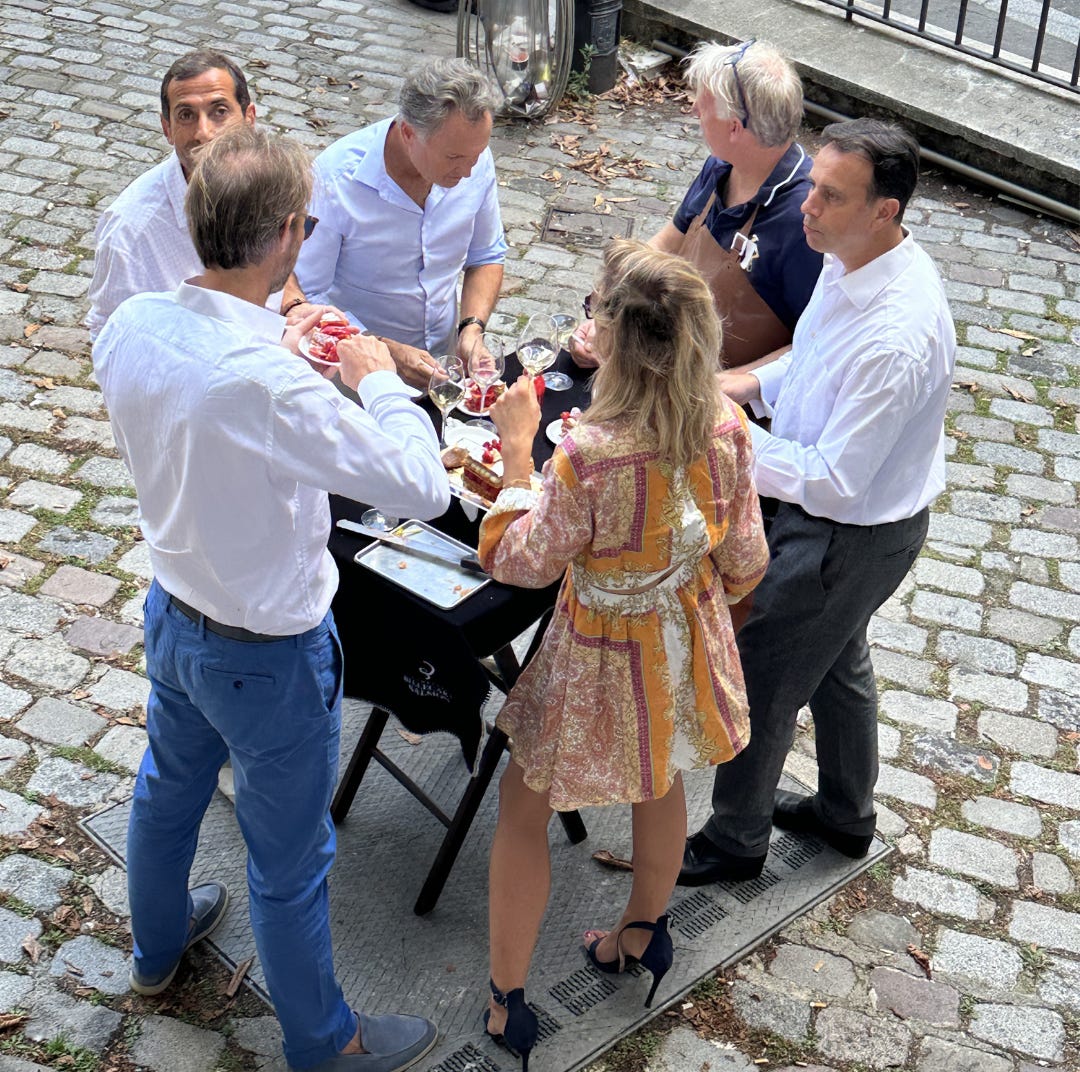
So why aren’t more people living like this?
Because discernment doesn’t have a product. You can’t sell someone the ability to trust themselves. You can’t monetise someone who already knows what they want and why they want it. Every industry profits from you believing the good life is just out of reach. The Tasteful Hedonist is a terrible customer. She already has enough. She knows when to stop and when not to. She doesn’t need a programme to tell her she deserves the wine and she doesn’t need a tracker to tell her she shouldn’t have had it.
But there’s something deeper than that. Discernment takes practice and practice requires a period of getting it wrong. Most people never get that window. They go straight from being told what to do - by school, by parents, by Instagram - to being sold a system that tells them what to do next. The self-optimisation industry arrived at exactly the moment people were starting to figure themselves out and handed them a shortcut that wasn’t one.
And then there’s the visibility problem. The over-optimiser has a morning routine to post. The hedonist has a night out to post. The Tasteful Hedonist has a Tuesday that was quietly perfect and completely unphotographable. The in-between doesn’t perform well. So nobody sees it modelled. Nobody learns it exists. Nobody knows to want it.
That’s the gap nobody is filling.
And the reframe is actually quite simple. Rather than asking what something will cost you, ask what you will gain. Usually it’s everything and more, and the only person that can “track” it or “prove” it is you.
It’s actually the trendiest thing you can do.
Stay Trendie x
Getting rid of my ultrahuman ring and Apple Watch were the best things I ever did for my health