

In a world that tracks everything. Steps, screens, shares. Even our self-worth. We’ve become experts at performing our lives, but amateurs at actually living them.
I know this because I help build the performance.
That’s my job. I work with brands and creators to tell stories, shape perception, build worlds that people want to be part of. I understand how visibility works. I know what makes someone stop scrolling. I know how to make a moment feel aspirational, shareable, worth saving. I’m good at it.
And I still catch myself performing my own life.
Still curating. Still optimising. Still reaching for my phone before I’ve finished feeling the thing I’m about to document. Still caught in the loop of productivity, aesthetics, engagement. Of always needing to do, show, prove.
That’s the part nobody talks about. Not just that we live inside a performance culture, but that even the people who can see exactly how it works still get pulled in. Knowing how the trick works doesn’t make you immune to it. It just makes it lonelier when you notice yourself doing it anyway.
The machine
What began as connection turned into performance somewhere along the way. Every post, every plan, every part of life, optimised, curated, measured. We’ve become fluent in metrics but numb to meaning.
The algorithm doesn’t measure presence. It doesn’t reward inner peace. It tracks output. Clicks. Consistency. Conversion.
But it’s not just Instagram. Or TikTok. It’s the job interview that wants a five-year plan. It’s the CV that needs a perfect gap-free timeline. It’s the subtle pressure to always have something to show for your time.
The metrics might be digital, but the mindset is deeply societal.
We’ve internalised this algorithm. We track ourselves. We optimise our days. We feel guilty for slowing down, as if rest isn’t productive enough to be justified. Success has become a scoreboard. And presence? Peace? Joy that isn’t shared? It doesn’t count.
And before you even realise it, you’re no longer living for yourself. You’re living to be seen.
What I see from the inside
I’ve sat in meetings where we’ve planned how to make something look effortless. I’ve helped brands manufacture the exact feeling of spontaneity. I’ve watched content get reshoot four times to look like it was captured in the moment.
I’m not criticising it. That’s the craft. And when it’s done well, it genuinely moves people. But I’d be lying if I said it didn’t make me question where the line is. Between storytelling and performing. Between sharing something real and producing a version of real that’s easier to consume.
The people I work with aren’t dishonest. Most of them genuinely love what they do. But the system they’re inside, the one I’m inside too, rewards the performance of a life more reliably than the living of one. And over time that does something to you.
You start producing content about living instead of just living. You share the moment while simultaneously stepping outside it to document it. It becomes second nature. But it’s not neutral. There’s a cost.
The more we perform, the less we feel. And the less we feel, the more we need validation to fill the gap.
The cost of not feeling
No one really talks about how exhausting it is to constantly be visible.
The pressure to stay relevant. The pressure to create. The pressure to make your life your brand. It’s a kind of quiet burnout, not necessarily from doing too much, but from not feeling enough.
We end up disconnected from ourselves, even while being hyper-connected to everyone else. We over-schedule. We over-share. We optimise every minute of our day, and yet we forget to actually be in any of it.
And I get it. Feeling is hard.
Feeling means pausing. It means being honest. It means facing the gap between how life looks and how it actually feels. And that’s scary. Especially when your work depends on how things look.
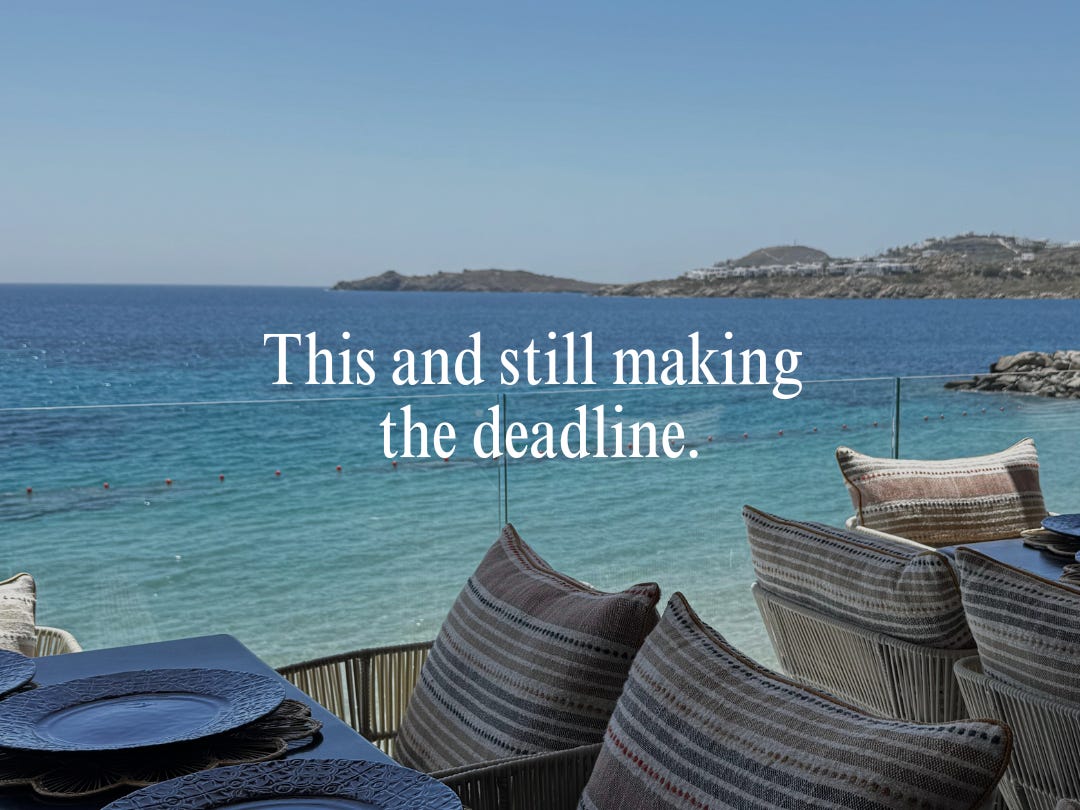
I notice it in small moments. When I’m at a dinner and my first instinct is to photograph it before I’ve tasted anything. When something good happens and my second thought, not my first but close, is how to share it. When I catch myself framing a moment for an audience before I’ve let myself be in it.
Those moments used to pass without me noticing. Now I catch them. And catching them is the whole point.
The return to feeling
I didn’t create Trendie to tell people how to live. I created it because I needed a different way to live myself.
A way that let me be ambitious and present. Creative and grounded. Online and still in touch with my own inner world.
I didn’t want to be another burnout case from a life that looked great on paper but left me feeling numb. And I didn’t want to opt out entirely because I love what I do. I love building. I love creating. I love the craft of making something feel like something.
I just needed to make sure I was still feeling something too.
It’s not about rejecting performance altogether. It’s about reclaiming presence. It’s not about opting out of ambition. It’s about redefining it on your terms. It’s not about never sharing again. It’s about making sure what you do share is coming from a place that’s real.
We start small. We start by checking in with how something feels, not just how it looks. We post less but mean more. We let rest be productive. We remind ourselves that success isn’t a metric, it’s a state of being.
And maybe we stop trying so hard to perform the life, and let ourselves feel it again.
That’s where the real hedonism lives. Not in the excess, but in the depth. Not in the applause, but in the aliveness.
And that’s what makes it tasteful.