

The best thing I ever did was start living a life I didn’t want to escape from.
For a long time, I lived for a future version of myself. I was always planning and preparing, always trying to do everything properly. I didn’t know how to enjoy my life as I was living it, or how to sit inside the journey while it was still unfolding. It felt quite literally impossible. I thought control was maturity, certainty was safety, and that if I could just hold everything tightly enough then absolutely nothing could go wrong.
For a while, that grip did offer reassurance. Life felt predictable and I felt as though I was doing it the right way. But holding on only works until you start relying on everything going to plan. When it does not, you begin to see how little control you actually have, and how much of your identity has been built around managing the uncontrollable.
Looking back, that unravelling taught me something simple but important. You cannot control outcomes, only how you respond to them. The things I had fixated on for years never arrived in the way I imagined, and when something began to feel off, I realised I needed to take responsibility for my choices instead of waiting for life to happen to me.
So I let go of control and deliberately went the other way.
I quit a perfectly stable job to become a chalet girl in Courchevel 1850, swapping certainty and a clear trajectory for something far more uncertain. It made very little sense on paper, but it felt richer in practice. I wanted to feel my life again, even if that meant walking away from what looked sensible.
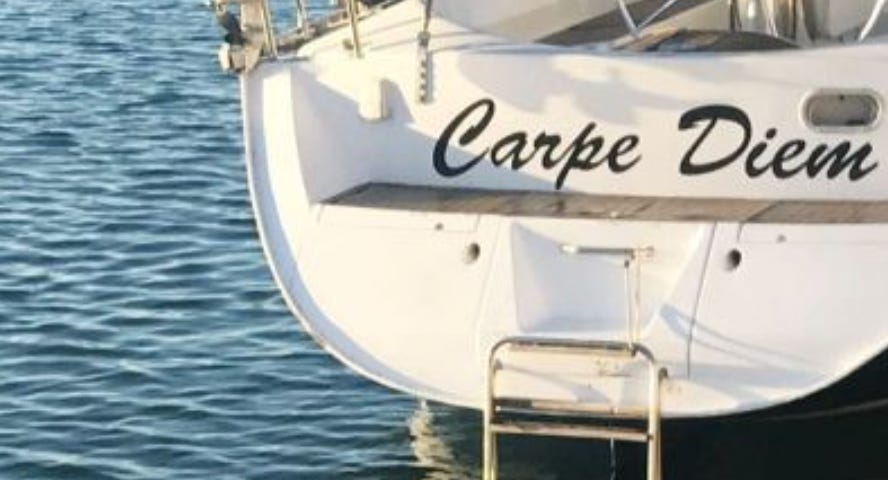
For a while, carpe diem became the phrase I lived by, and in many ways it did exactly what I needed it to do. It pushed me to say yes more often, to move, to travel, and to leap rather than hesitate. Over the next two years I travelled to more than fifteen countries, lived in Croatia, Amsterdam and Paris, and lived out of a suitcase. By loosening my grip on control, I found myself more present inside my own life.
From the outside, it probably looked hedonistic, as though I was chasing pleasure for its own sake. People often said to me “you’re always on holiday”, and I felt a quiet need to explain that what I was doing was far more deliberate than it appeared.
I wasn’t just escaping my life, I was living it and building it at the same time. I was working and creating all whilst paying close attention to how it all felt. I was developing a relationship with my own taste in real time, not taste as status or aesthetics, but taste as sensitivity. I began noticing what genuinely fuelled me and what quietly drained me, what felt exciting in the moment but left me oddly empty afterwards.
I knew, for example, that I didn’t love cleaning toilets or making beds, but I loved what my ski season gave me. I loved the freedom, being in rooms with people I could learn from, commuting to work in a gondola rather than a packed tube, the ability to earn good money and the time to enjoy it, and the creative energy that came from documenting it all. Those details mattered far more than the job title itself.
I could easily have done five ski seasons by now if my chalet manager hadn’t said to me, very simply, “don’t do the same thing twice”. She was right. I did not want to keep replaying the same chapter just because it was exciting. I wanted to take what I loved from that experience and build something that could last.
Learning what actually felt good
Straight after that ski season, I moved to Croatia to create content for The Yacht Week. If you are not familiar with it, The Yacht Week is essentially hedonism packaged into a week long sailing trip with people from all around the world. It’s pretty much a floating festival.
People come for a week, but I was there for sixteen weeks because my role required me to be fully immersed in the experience. Creating iPhone content meant I could not observe from a distance. I had to live it from the point of view of the guest while also representing the brand and shaping how the experience felt.
I went to every party because that was part of the job, and while I enjoyed myself, I never fully lost myself in it. I was still working, still showing up with intention, and still aware that I was responsible for how the brand was being felt and perceived.


It was intense in ways I had not anticipated. Constant social interaction, late nights, eating out every day, and a social battery that never had the chance to switch off. I used to say “I just want a salad” because honestly in all the excess, I was craving a bit of simplicity.
Not because I was ungrateful or not enjoying myself. I was deeply grateful and aware of how fortunate I was to be there. But even in the middle of excess, my body and mind were quietly signalling what they needed.
With no one structuring my time for me, I had to find a rhythm that I could sustain, and that process taught me more than I expected. Like my ski season, it clarified both what I enjoyed and what I did not want forever. I loved the people, the travel, the creativity, and the absurdity of calling travelling and partying work, but I knew it could not be my entire life.
Choosing pleasure with discernment
At the time, I did not yet have language for what was happening, but something had shifted. I was not rejecting pleasure, and I was not chasing it either. I was learning how to enjoy my life with discernment by choosing what genuinely enriched me and stepping away from what quietly numbed me.
That way of living is what I later came to call Tasteful Hedonism.
Once I understood that distinction, everything began to change. When you choose pleasure with discernment, escape stops being necessary because your life no longer feels like something you need a break from. Instead, you begin building something that supports enjoyment rather than undermines it. You allow ambition and joy to coexist.
I still ask myself the same question. If I’m selling a yacht experience, why am I not on a yacht? If I’m selling a ski experience, why am I not in the mountains?
That question is what pushed me to start my own agency.
I had always wanted to work for myself, even if I had not yet worked out what that would look like. I had already been freelancing alongside my role and had used up all my annual leave. So I started looking for a way to keep working with the brand while creating space for other projects.
Eventually, I pitched the idea of taking my role freelance. Not because I wanted less responsibility, but because I knew I would do better work if I was trusted with my time. The work was never meant to fit neatly into a nine to five. It was meant to be lived.
They did not understand it at the time, but I did it anyway.
I was already freelancing for a fashion design agency that paid me more than my salary, and that final sense of self belief gave me the push I needed to set up Trendie Social, which has since grown into the wider Trendie ecosystem.
Staying in the middle
I don’t live by a rigid plan anymore. I trust my ability to notice what enriches me, what numbs me, and when I start drifting toward either extreme. Trendie acts as an anchor.
That is what I did not know how to do before.
Choosing pleasure with discernment taught me how to enjoy what is in front of me without constantly needing to escape it, and how to build something that supports that enjoyment rather than working against it.
I used to live by the phrase carpe diem, but over time it has shifted into something quieter and more personal.
Carpe your life.
Carpe diem is about the moment. It’s a leap. It’s reactive and brilliant for shaking you out of paralysis. But moments on their own don’t sustain you. They need somewhere to land.
Carpe your life is about building the thing that holds them. Making the highs last. Not chasing the next one but creating a life where enjoyment isn’t something you escape into, it’s something you already live inside.
Trendie grew out of this way of living, not as a brand idea but as a practice and a reminder to stay present, to trust your taste, and to build a life you genuinely want to be in.
I have lived at both extremes of total control and total surrender, and what I eventually realised was that the in-between is the sweet spot and a pretty great place to be. It’s the place where life feels good now while still making sense later, and where you do not have to choose between living fully and building something real.
That is where I am, and that is what I am building.